smart manufacture system
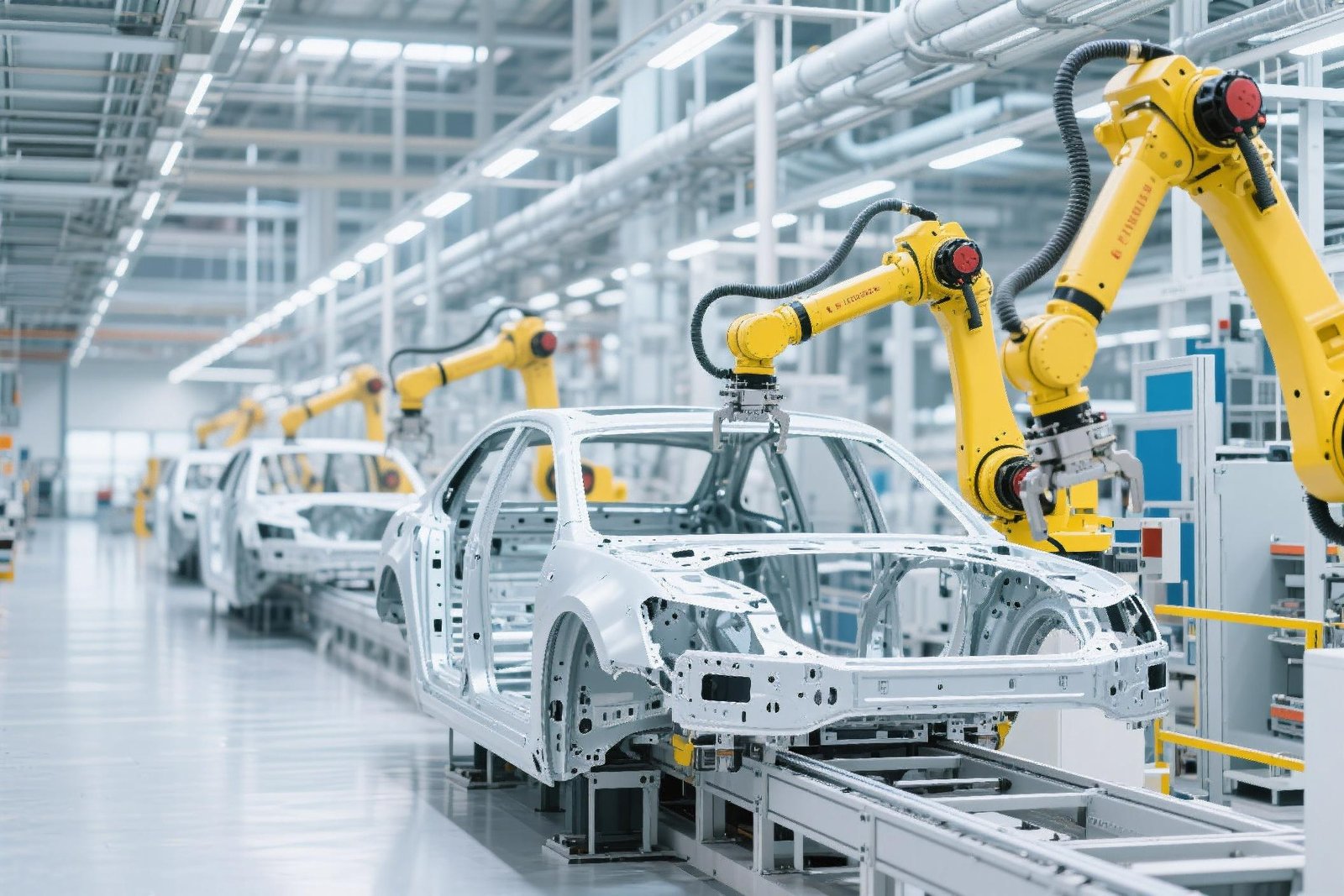
The application of **Smart Manufacturing Systems (SMS)** in China has transitioned from a government-led vision into a massive, data-driven reality. As of 2026, China has solidified its position as the global leader in advanced industrial automation, hosting **101 “Lighthouse Factories”**—nearly half of the world’s total—as recognized by the World Economic Forum.
### 1. The “5G+ Industrial Internet” Backbone
The cornerstone of China’s smart manufacturing is the deep integration of **5G-Advanced** and the **Industrial Internet of Things (IIoT)**. With over **17,000 projects** spanning all 41 major industrial sectors, 5G is no longer just for communication; it is the central nervous system of the factory.
* **Massive Connectivity:** These systems connect over **120 million industrial devices**, allowing for millisecond-level synchronization between robotic arms, sensors, and logistics vehicles.
* **Predictive Maintenance:** AI algorithms analyze real-time vibration and temperature data from machinery to predict failures before they occur, reducing unplanned downtime by up to **30%**.
### 2. Digital Twins and Cognitive Networks
Modern Chinese plants, such as those operated by **GAC Aion** or **Haier**, utilize **Digital Twin** technology. Every physical movement on the production line is mirrored in a virtual 3D environment.
* **Virtual Commissioning:** Engineers can test new production configurations in the digital twin first, shortening the research and development (R&D) cycle by nearly **35%**.
* **”Dark Factories”:** In high-end electronics and automotive assembly, “lights-out” manufacturing has become common. These facilities operate entirely via autonomous robots and AGVs (Automated Guided Vehicles), maintaining 24/7 production with zero human intervention in sterile or hazardous areas.
### 3. AI and Generative Design (GenAI)
By 2026, **Generative AI** has moved into the core of manufacturing. Systems now assist in **Agentic AI** decision-making, where the manufacturing system itself can reconfigure production schedules based on sudden shifts in global supply chains or customer demand.
* **Mass Customization:** Factories like **Lenovo** or **Mettler Toledo** in Changzhou can now handle “single-item orders” at the same speed as mass production. AI optimizes the logistics and parts sourcing for 160,000+ different SKUs (Stock Keeping Units) simultaneously.
* **Quality Control:** AI vision systems, often referred to as “Smart Eyes,” inspect components at speeds of hundreds per minute, identifying microscopic defects that the human eye would miss, reducing product defect rates by over **40%**.
### 4. Sustainability and Green Manufacturing
Smart systems are also the primary tool for China’s “Dual Carbon” goals. Intelligent Energy Management Systems (IEMS) monitor every kilowatt of electricity used.
* **Energy Optimization:** By correlating production speed with energy costs and carbon intensity, these plants have achieved an average **25-30% reduction** in Scope 1 and 2 emissions.
* **Circular Economy:** Systems now track the entire lifecycle of a product, from raw material sourcing to take-back and refurbishment, enabling a more sustainable, circular manufacturing model.
### Conclusion
China’s smart manufacturing is no longer about “cheap labor”; it is about **”New Quality Productive Forces.”** By democratizing automation for small-and-medium enterprises (SMEs) and scaling high-end cognitive AI for giants, China has created a resilient, highly flexible industrial ecosystem that is increasingly self-reliant and globally competitive.
—
**Would you like me to focus on a specific industry, such as Smart Automotive Manufacturing or Smart Electronics, to see how these systems are applied in detail?**