mega greenhouse smart agricultural project
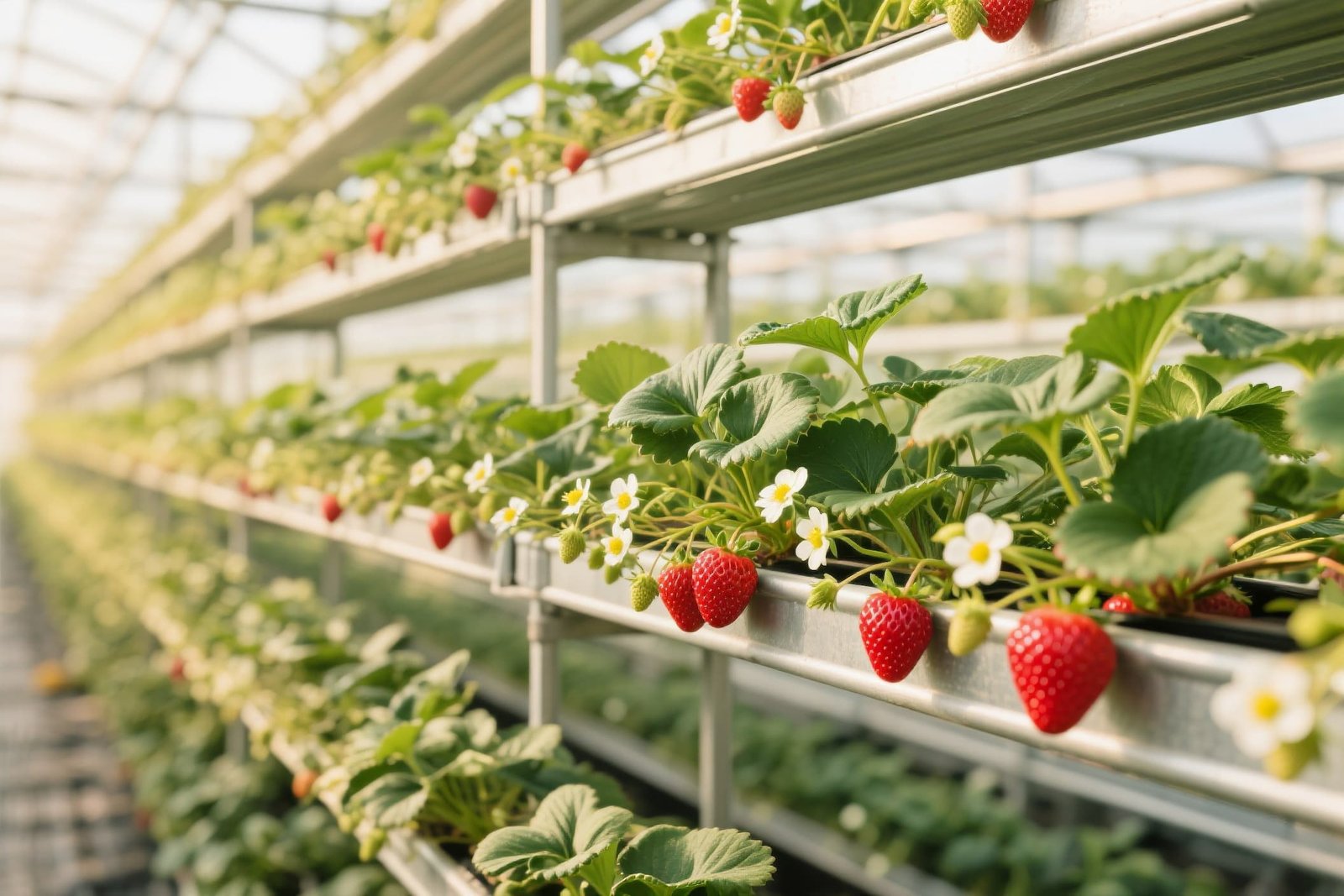
The concept of the Chinese-made Mega Greenhouse represents a high-tech fusion of traditional civil engineering and « Space-Age » information technology. Often referred to as « Plant Factories » or « Intelligent Glass Venues, » these structures—some spanning over 50 hectares in a single site—are transforming China’s arid north and high-altitude regions into year-round vegetable baskets.
1. Architectural Innovation: The Venlo-Style Evolution
Modern Chinese mega greenhouses typically utilize an evolved Venlo-style glass structure, optimized for high light transmission and structural integrity. Unlike traditional plastic tunnels, these semi-closed systems use specialized anti-reflective glass that allows over 97% of sunlight to reach the plants. To manage China’s diverse climate, these facilities are equipped with automated external and internal shading systems, as well as high-pressure fogging systems for adiabatic cooling in summer and thermal blankets for heat retention in winter.
2. The « Brain »: AI-Driven Environmental Control
The « Smart » aspect of these plants lies in the Environment Control System (ECS). Thousands of IoT sensors monitor CO2 levels, vapor pressure deficit (VPD), root zone temperature, and photosynthetically active radiation (PAR).
-
Autonomous Climate Adjustment: Using deep learning, the greenhouse « breathes » on its own—opening roof vents or activating industrial-scale fans and wet curtains based on predictive weather data.
-
Hydroponic Precision: Most mega greenhouses employ NFT (Nutrient Film Technique) or substrate cultivation (using coconut coir). The fertigation system is fully automated, recycling 100% of the water and nutrients, which reduces water consumption by 90% compared to open-field farming.
3. Robotic Labor and Logistics
In a facility the size of several football fields, human labor is inefficient. Chinese smart agriculture plants utilize:
-
Automated Internal Logistics: Electric rail-guided vehicles (RGVs) move harvesting crates from the growing rows to the packing center without human drivers.
-
Plant Phenotyping Robots: Mobile robots equipped with multispectral cameras patrol the aisles, identifying early signs of pests or nutrient deficiencies before they are visible to the human eye.
-
Automated Seeding and Grafting: High-speed robotic lines can graft thousands of seedlings per hour with a success rate near 99%, ensuring a uniform crop cycle.
4. Energy Integration: The « Agri-PV » Model
A unique characteristic of Chinese mega greenhouses is the integration of Photovoltaics (PV). Many « Smart Agriculture Parks » feature semi-transparent solar panels on the roof or adjacent solar farms. This energy powers the LED supplemental lighting—which mimics the solar spectrum to allow for 24-hour growth—and the massive HVAC systems, making the greenhouse a self-sustaining energy loop.
5. Urban Proximity and the « Cold Chain »
These plants are often built on the outskirts of « Tier-1 » cities like Beijing, Shanghai, or Shenzhen. By producing food locally in a controlled environment, China is shortening the supply chain. Fresh produce can go from a robotic harvester to a consumer’s table in less than six hours, drastically reducing « food miles » and post-harvest waste.
The Global Significance
Chinese companies like Kingpeng and CO粮 (COFCO) Agriculture are now exporting these turnkey greenhouse solutions to the Middle East and Central Asia. By proving that « Smart Plants » can grow tomatoes in the desert or strawberries in the snow, China is positioning its smart agriculture tech as a vital tool for global food security in the face of climate change.
Would you like me to find specific data on the crop yields per square meter in these smart plants compared to traditional farming, or perhaps more details on the LED spectrum technology they use?
Galerie